
Fukuyama's Schmitt Posting
Maybe the Enlightenment is just a polemical concept

Francis Fukuyama is a great public intellectual. He’s also an engaged public intellectual, locked in a war of words against the Orange Man and his entourage. I don’t begrudge a man his political causes, even if his insights have slipped and he increasingly phones his comments in. But his recent Substack intervention, wherein he defends a secular Western liberal Enlightenment against Marco Rubio’s more Christian-centered account, delivered at the Munich Security Conference, deserves a closer look.
Fukuyama’s essay is not profound. But it’s fascinating because of what it inadvertently reveals. Beleaguered liberals often adopt an illiberal understanding of politics that imitates their arch-nemesis, Carl Schmitt. To legitimate their position, they rely on a polemic that crudely divides the world between liberalism’s friends and enemies, and argues accordingly. Often the surface polemic—in this case, attacking the Trump administration—masks a deeper one. So the question is: who is the Real Enemy of Fukuyama’s secular Western liberal Enlightenment?

Fukuyama chastises Rubio for offering a definition of Western civilization that is rooted in “active Christian belief,” rather than one rooted in Christian heritage. Faith is too substantive, argues Fukuyama. It puts Rubio not only at odds with the civilization he purports to defend; his understanding is “quite different from the understanding of most contemporary Europeans.”
Fukuyama is right that apologias for the West assume more unity to a fractured civilizational space than there actually is. Every attempt at a substantive definition of the West runs up against considerable headwinds. This includes Rubio’s. He’s also right to suggest that the divide between Americans and Europeans makes it difficult to arrive at a common definition.
And the America Firsters are rather rude to their co-civilizationalists. Europeans are “flabby,” and “self-satisfied”, “inward-looking” and “weak-willed”; their “grandest project” is “nothing more heroic than the creation of the Common Market.” Vance can say the nastiest things. Or was that Fukuyama, back when he was proclaiming the onset of the America First-unipolar era?
But let bygones be bygones. It’s not 1989 anymore. Friends and enemies have changed; yesterday’s flabby European is today’s muscular liberal ally. Fukuyama and the good Europeans can stand together and represent the real, liberal West against Rubio’s fake version. United, their superior grasp of political thought can pull rank over MAGA’s Generalissimo.
Rubio defines the West as a civilization rooted in Christian belief; Fukuyama offers a thinner alternative. He defines the West by liberalism; its concepts came from Christianity. “There is no question that Western civilization is rooted in “Christian heritage,” he writes, because the ideas of equality and dignity are rooted in Christian theology. Hegel and Tocqueville said as much.
These are good points. Except that Fukuyama doesn’t know his European friends as well as he thinks he does. Even this definition of the West or of Europe as indebted to a Christian heritage could not past muster in Europe. In the early 2000s, it proved too controversial to insert a line saying as much into the European Constitution. Europe’s elites preferred to stress their Islamic heritage rather than their Christian one. It turns out Fukuyama’s definition of the West is also “quite different from the understanding of most contemporary Europeans.”
But then Fukuyama is not really acting as a herald for the voice of Europe. He’s acting as a different kind of herald, as we see in the second half of the essay. He proclaims what the Enlightenment is, what its goals are, and why it impels good liberals to reject Rubio’s reactionary thinking:
the Enlightenment founders of modern liberalism agreed to push religion into the realm of private belief, and to focus politics on life itself rather than the good life as defined by a particularly religious doctrine.
Fukuyama uses this position of what Enlightenment is and what its goals are to contend that those such as Rubio who want a living Christian creed to inform the West are touting intolerant anti-liberalism.
But is the above an accurate description of the stated public positions of Enlightenment thinkers? It may describe the esoteric strategy of some, yet Fukuyama is slipping in quite a radical interpretation of the Enlightenment. We can see this if we recall a paradigmatic figure of early liberalism, John Locke, and his Letter Concerning Toleration.
Famously, the Letter does not extend toleration to Catholics because they profess loyalty to a foreign leader—the Pope that could undermine the civic order. Perhaps Locke, like postwar Protestants alarmed at the Catholic Kennedy’s candidacy for president, misunderstood Catholicism. Perhaps they can be quickly reassured that the Pope does not command Catholics in temporal matters, thereby saving liberalism and the project to privatize religious belief.
But Locke’s anti-Catholicism is intelligible less by reference to his fears of its temporal authority and more by reference to his Protestantism (albeit of a dissenting kind). Locke’s comment in the Letter on the danger of atheism is also best explained by reference to his Protestantism, reinforcing the importance of public-facing Christianity. He does not argue that religion should be pushed into the realm of private belief. Rather, he argues atheists are dangerous because they threaten the very foundation of society, which requires a public profession of belief in God:
Finally, those who deny that there is a Deity must in no way be tolerated. For an atheist, neither faith, nor compact, nor oath—which are the bonds of human society—can be stable and holy, so much so that all of these are corroded once God or the very belief in Him is removed. Moreover, he can claim no privilege of toleration for himself in the name of religion, who destroys through atheism the foundation of every religion.1
Fukuyama is not interested in grappling with the Christian beliefs of Enlightenment thinkers. He’s invoking a stylized secular Enlightenment that is preoccupied by the danger of Christians expressing their beliefs publicly.
And under the guise of moderate centrism, Fukuyama uses the concept of the Enlightenment to legitimate an even more radical secular project than the one he contends took place in the 17th or 18th centuries. Or even one which the late John Rawls proposed. The goal of “pushing religion into the realm of private belief” exceeds what Rawls asked of political liberalism, which is that one’s arguments need to be justified in terms of a secular public reasoning accessible to non-believers. Religion doesn’t need to be pushed into the realm of private belief; it needs to be publicly intelligible. Rawls held the public sphere open to a kind of liberal Protestantism. Fukuyama elides the distinction to banish Christianity entirely.
What comes through in Fukuyama’s pulling rank over our State Department’s Santa Anna is a polemical strategy targeting publicly expressed religious belief. If you’re a Christian, the project of the West demands you keep it to yourself.
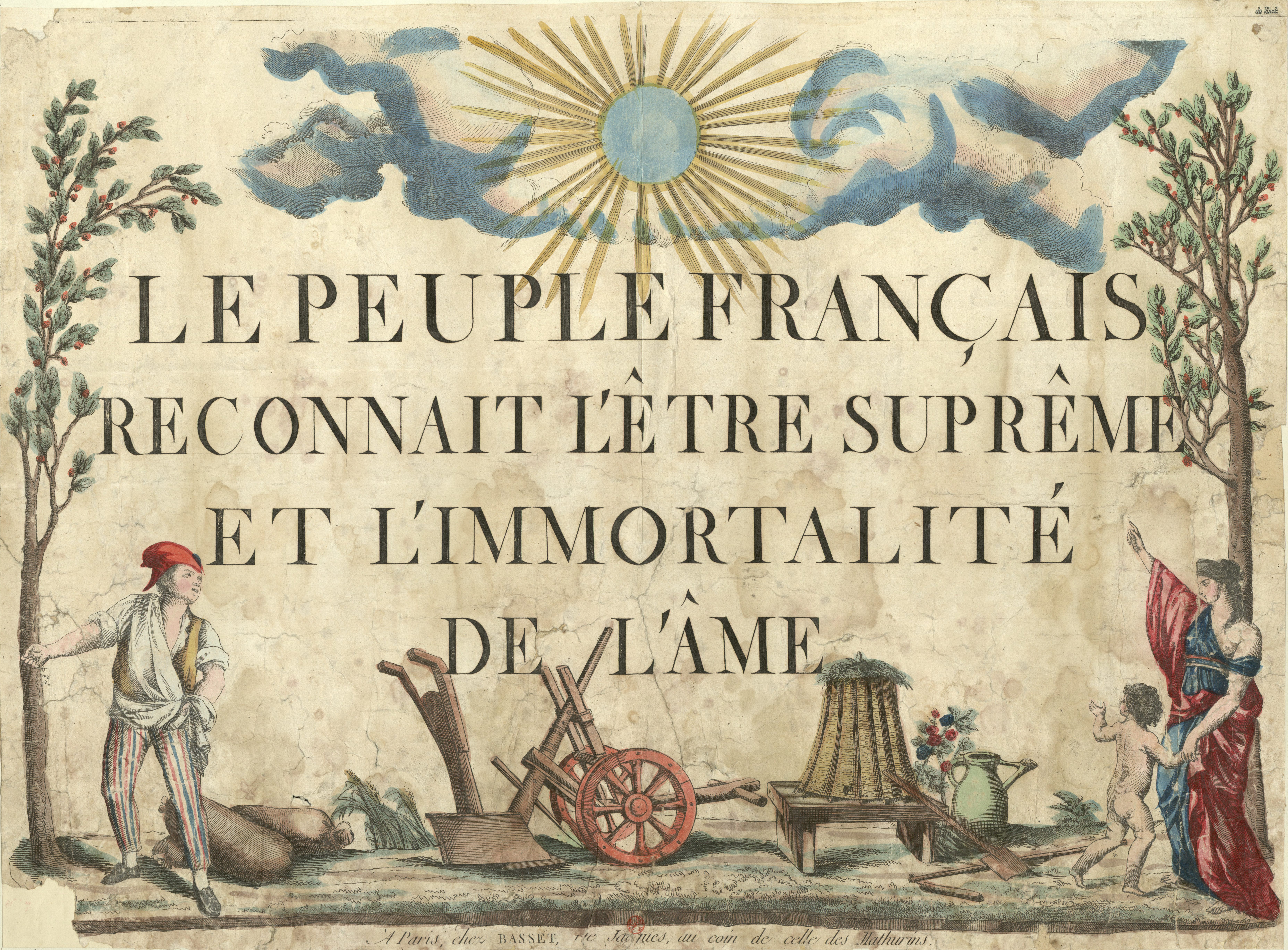
Then Fukuyama delivers another extraordinary claim:
In addition, early natural scientists were engaged in a prolonged struggle with the Catholic Church; it was only with the separation of empirical inquiry from religious dogma that modern natural science, and the economic world it made possible, emerged.
Now we know exactly who Fukuyama’s aiming the gun at. It’s not just general, publicly expressed Christian religious belief that poses a problem for liberalism; it’s the Catholic Church.
This charge is typical late modern anti-Catholic propaganda. It requires imagining that scientists and faithful believers, such as Roger Bacon (Order of Saint Francis), Copernicus (minor orders), and Georges Lemaître (Society of Jesus), never existed. The full scope of Fukuyama’s polemical strategy comes into focus.
But there’s a catch: Fukuyama’s polemical strategy is rooted in the Anglo-American Protestant heritage. It’s a venerable WASP tactic to attack Catholics for being anti-scientific. So it comes as no surprise that when Fukuyama delivers his coup de grâce against Rubio, he adopts one rather problematic WASP trope:
I hate to remind Rubio, but his particular heritage and ancestry lead back to an authoritarian and Catholic Habsburg Empire, while that of James Monroe and Thomas Jefferson lead to a very different and more liberal Protestant part of Europe.
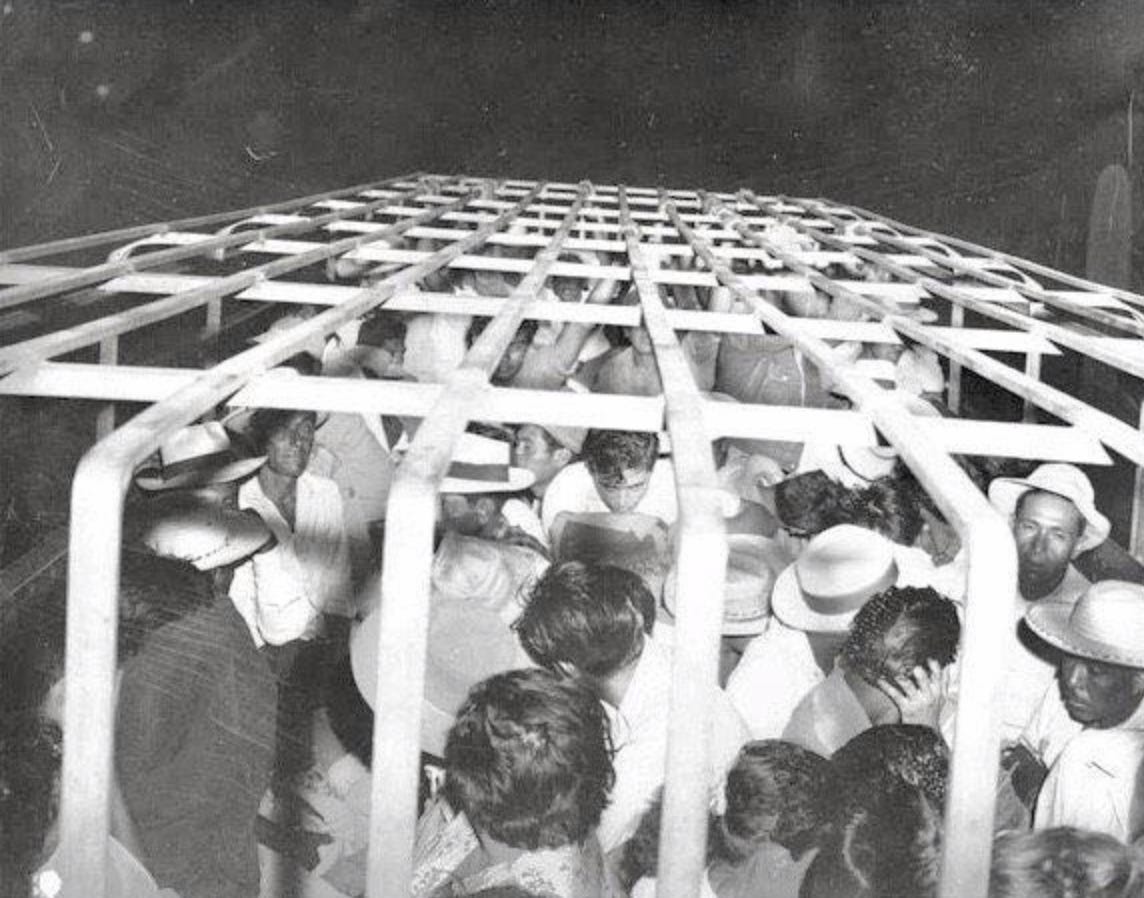
Perhaps Fukuyama is just “noticing” here. Yet in his zeal to denounce Rubio, Fukuyama acts like the typical mid-20th century WASP. He runs his own little intellectual Operation Wetback, reassuring his Anglo readers of their own ethnic superiority over the Latin. He promises to chase those with the bad Papist, authoritarian ethnic tendencies out—if not of the country, at least of legitimate intellectual company.
Mary Harrington has a fun essay observing the commonality between Fukuyama’s own project and that of the ethno-identitarian far-right. Here we see the deeper problem of Fukuyama’s attempts to hold to the viability of “the West” but to divorce it from any living creed and culture. If the liberalism unique to the West is not rooted in a living creed and culture, then the temptation is to regard it as rooted in ethnic heritage. Fukuyama accidentally backs into this position. Here he demonstrates for us why the Left have been such successful critics of a secular ‘West’. They sense the ethnic undertones and believe it’s an appeal to racial, Anglo, supremacy. And proponents of the secular West, embarrassed, try to save themselves by fleeing into abstract universals to define ‘the West.’ It’s a sign of loss of purpose and weakness; the “Rest” still rallies against the West.
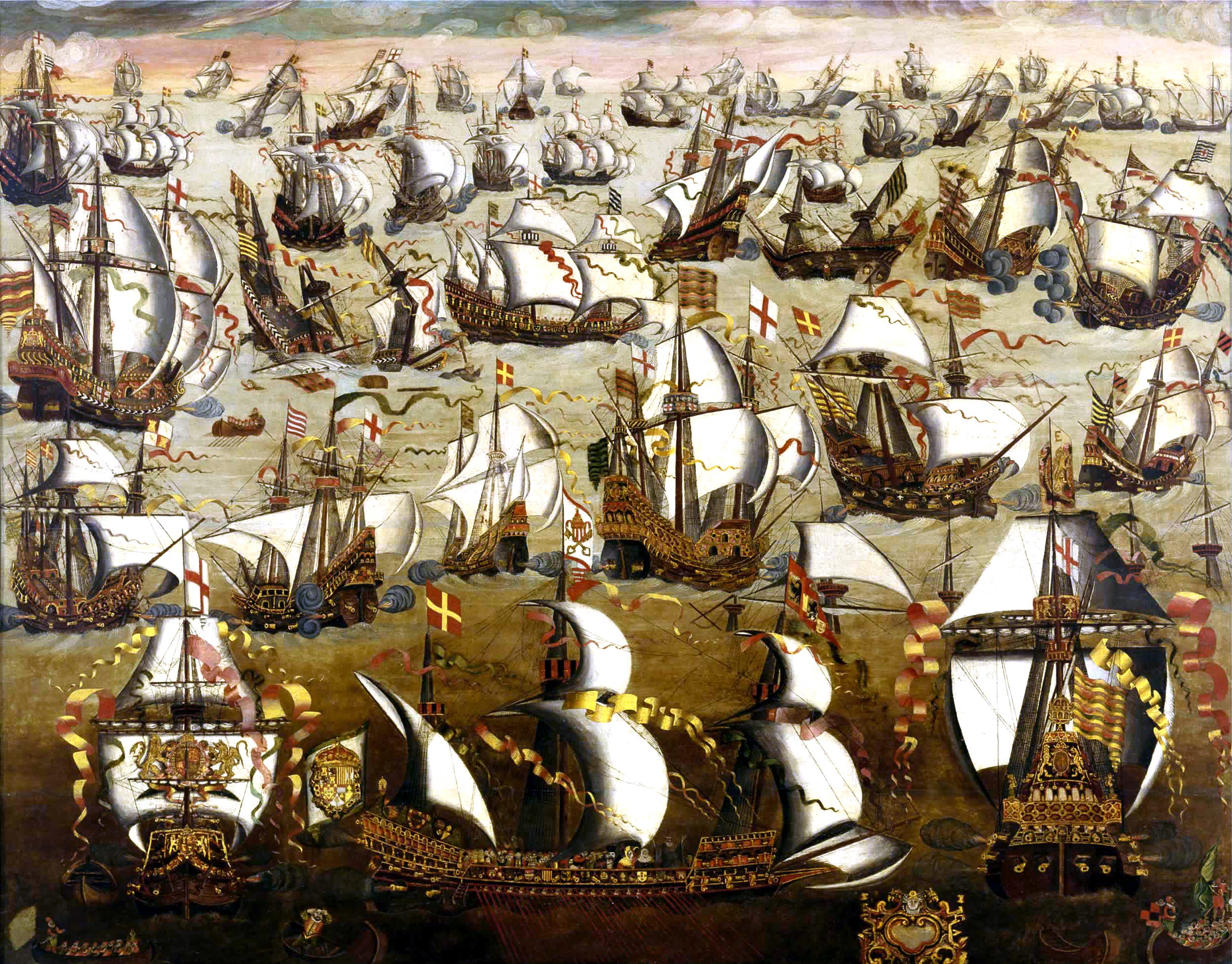
Fukuyama’s position is also eerily similar to one expressed by Oliver Cromwell. In a speech that Carl Schmitt was fond of citing, Cromwell provided the perfect archetype of the friend-enemy distinction:
Why, truly, your great Enemy is the Spaniard. He is a natural enemy. He is naturally so; he is naturally so throughout,-by reason of that enmity that is in him against whatsoever is of God. ‘Whatsoever is of God’ which is in you, or which may be in you.”
Replace God with ‘liberalism’, and you have a perfect distillation of what Fukuyama’s defence of the Enlightenment is all about.
Fukuyama’s polemic is not new. As Fukuyama circles the wagons to defend liberalism, his account of the Enlightenment echoes those of other postwar intellectuals. They defined Enlightenment in terms of its purported secularism, while making no secret of their contempt for religion and particularly their contempt for Catholicism.
This also happens to be the period when the expression ‘the Enlightenment’ took off. Coincidence? Perhaps not. We should consider the possibility that ‘the Enlightenment’ is largely a postwar construct, invented by a secular sect, to target the usual suspects.
It’s a good moment to read J.C.D. Clark’s provocative book The Enlightenment: An Idea and its History. I recently reviewed the book for Modern Age. It’s now out from behind a paywall, and you can read it below, with Fukuyama’s enmity for the Spaniard in mind:
The concept of the Enlightenment presupposes the concept of the political. That’s one of many provocative conclusions a reader might draw from J. C. D. Clark’s magisterial work The Enlightenment: An Idea and Its History. In this penetrating survey of the seventeenth and eighteenth centuries, Clark argues that there is scant evidence for a common philosophical, social, or political movement during that period. In this sense, the Enlightenment never happened.
Read the rest at Modern Age
John Locke, Epistola de Tolerantia, My translation.
I’m glad you published on sub stack. Last time you linked to Blaze or something like that, and I couldn’t read it.